Where the idea comes from
In 1983, Harvard psychologist Howard Gardner published Frames of Mind, arguing that intelligence isn't a single thing that an IQ test can capture. He described several relatively independent abilities — later expanded to eight — that people combine in different ways. A gifted dancer and a gifted mathematician are both intelligent, just differently.
The theory became hugely popular with teachers and parents because it matches what they see every day: children who struggle with textbooks but shine on the sports field, on stage or with people.
The 8 intelligences, with examples
| Intelligence | What it looks like | Everyday example |
|---|---|---|
| Linguistic | Words, reading, writing, storytelling | Loves books, debates, word games |
| Logical-mathematical | Numbers, patterns, reasoning | Enjoys puzzles, asks "why?", likes experiments |
| Visual-spatial | Pictures, space, design | Draws, builds models, reads maps easily |
| Musical | Rhythm, pitch, sound | Hums constantly, remembers songs, keeps a beat |
| Bodily-kinesthetic | Movement, coordination, hands-on skill | Sport, dance, crafts, learns by doing |
| Interpersonal | Understanding other people | Natural leader or peacemaker in a group |
| Intrapersonal | Understanding oneself | Reflective, sets personal goals, keeps a diary |
| Naturalistic | Nature, living things, classifying | Loves animals and plants, collects and sorts things |
Everyone has all eight. What differs is the mix — which ones come easily and which need more effort.
How a multiple intelligence test works
There are two common approaches:
- Questionnaires — you (or a parent, for young children) answer statements such as "I enjoy solving number puzzles". Quick and free versions exist online, but results depend on honest, self-aware answers.
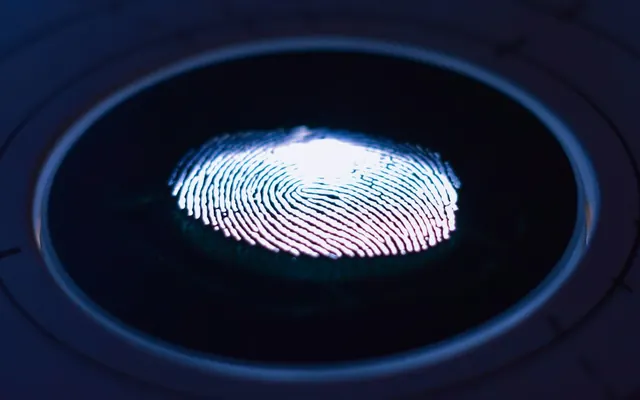
- DMIT (Dermatoglyphics Multiple Intelligence Test) — fingerprint patterns are scanned and analysed by software to estimate a multiple intelligence profile. It needs no reading or answering, so it's often used for young children. Learn more in what is DMIT?
Many counsellors combine both: the DMIT report as a starting point, and conversation, observation and questionnaires to confirm what fits.
Multiple intelligences in a DMIT report
In a typical DMIT report, the multiple intelligence section shows a percentage for each of the eight intelligences, usually as a bar or pie chart, followed by what each strength means and which careers or activities often suit it. Higher-level reports add sub-skills (for example, "numerical skills" and "abstract thinking" under logical-mathematical) and link the profile to learning style and stream selection.
You can see real pages — including the multiple intelligence chart — in our DMIT report sample.
How to use your results
- Study smarter: a strong visual-spatial learner may remember more from mind maps than from rereading notes; a bodily-kinesthetic learner may revise better while walking or using flashcards.
- Choose activities: use the top two or three intelligences to pick hobbies worth trying — music classes, chess, a nature club, drama.
- Explore careers: treat suggested careers as ideas to research, not destinations. Combine them with interests, marks and values. See DMIT for career selection.
- Grow the weaker areas gently: a low score isn't a ban. It simply tells you where more patience and practice are needed.
What it doesn't measure
Gardner's theory is influential but debated among psychologists, and no test — questionnaire or DMIT — measures intelligence with certainty. A multiple intelligence profile is not an IQ score, not a diagnosis and not a prediction of exam results. Use it to start better conversations about learning, not to label anyone. Our honest take: is the DMIT test real or fake?
FAQs
What are the 8 multiple intelligences?
Linguistic, logical-mathematical, visual-spatial, musical, bodily-kinesthetic, interpersonal, intrapersonal and naturalistic — as described by Howard Gardner.
Is a multiple intelligence test the same as an IQ test?
No. An IQ test gives one score focused mainly on logical and verbal reasoning. A multiple intelligence test describes a profile of eight different abilities.
At what age can a child take a multiple intelligence test?
Questionnaires suit older children and adults. A DMIT-based test can be done from around 2–3 years because it only needs fingerprint scans. See DMIT test for kids.
Can multiple intelligences change over time?
Abilities develop with practice and experience. A report shows natural tendencies; effort, environment and opportunity shape how far each one grows.